
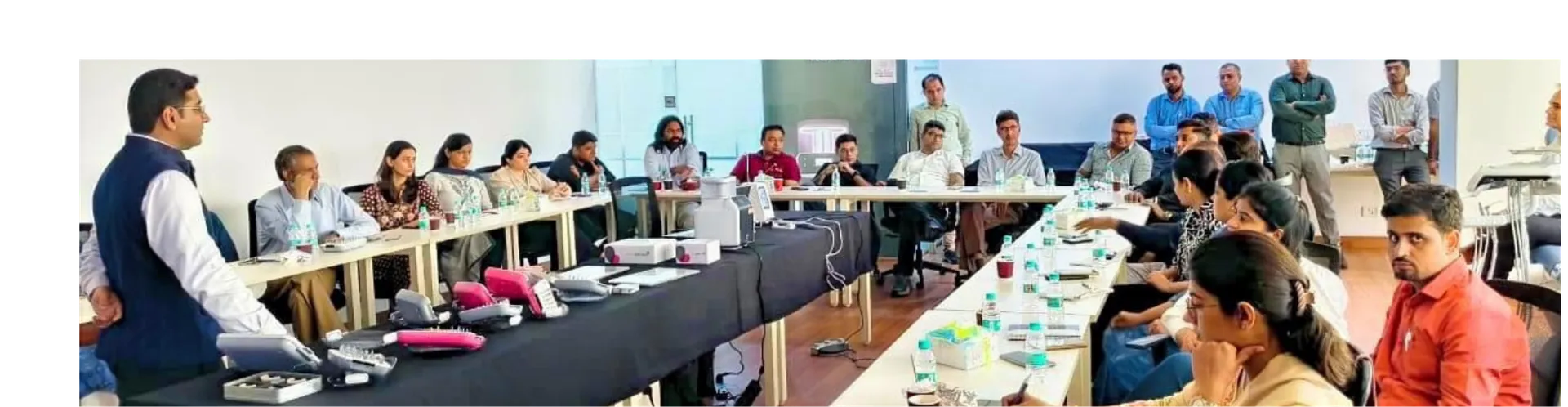
Advance your expertise with internationally recognized certification programs
Dental implant care brings together diagnosis, biology, surgery, restoration, and long-term maintenance. A clinician must understand how each part affects the next. DIO India's education and training programs are built to make this learning path clear and useful. The aim is not to fill a day with difficult terms. It is to help dentists connect sound ideas with the decisions they make in the clinic.
Good training starts with patient safety. Before planning an implant, a dentist must review the patient's health, dental history, bone, soft tissue, bite, and expectations. Learners explore why careful case selection matters and when a case may need another opinion or a different treatment. They also learn the value of complete records, clear consent, and honest talks about benefits, limits, healing, and home care.
The programs support dentists at several stages. A clinician who is new to implants may need a strong base in terms, instruments, treatment steps, and simple case planning. A dentist with more experience may want to improve digital planning, guided procedures, immediate placement, or full-arch workflows. Each program card below explains its audience, duration, trainer, outcomes, and enrollment route when those details are available.
Choose from our specialized training programs designed for different career stages
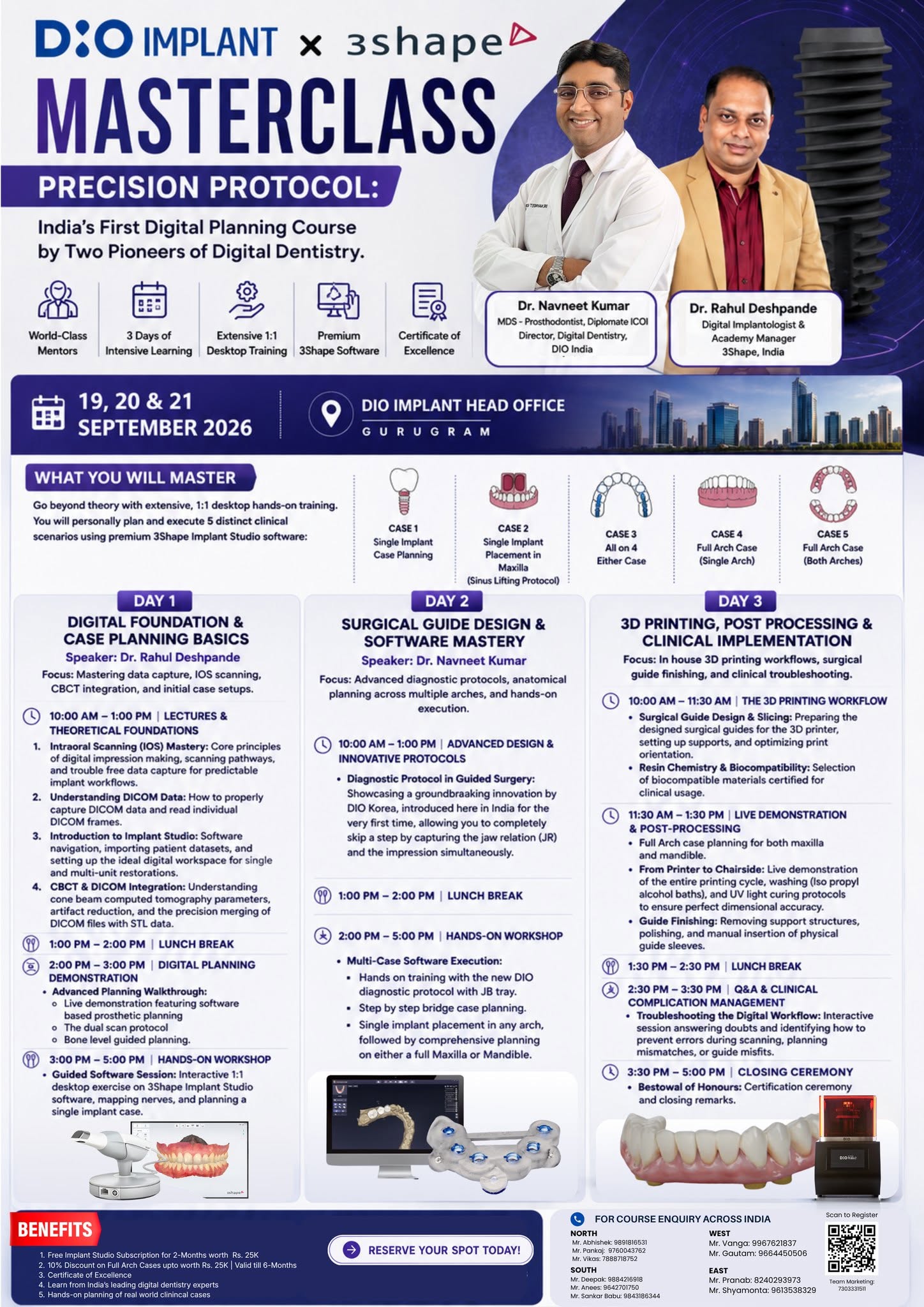
Get extensive 1:1 hands-on desktop training on 3Shape Implant Studio and learn to plan 5 real clinical scenarios—from single implants to full-arch cases.
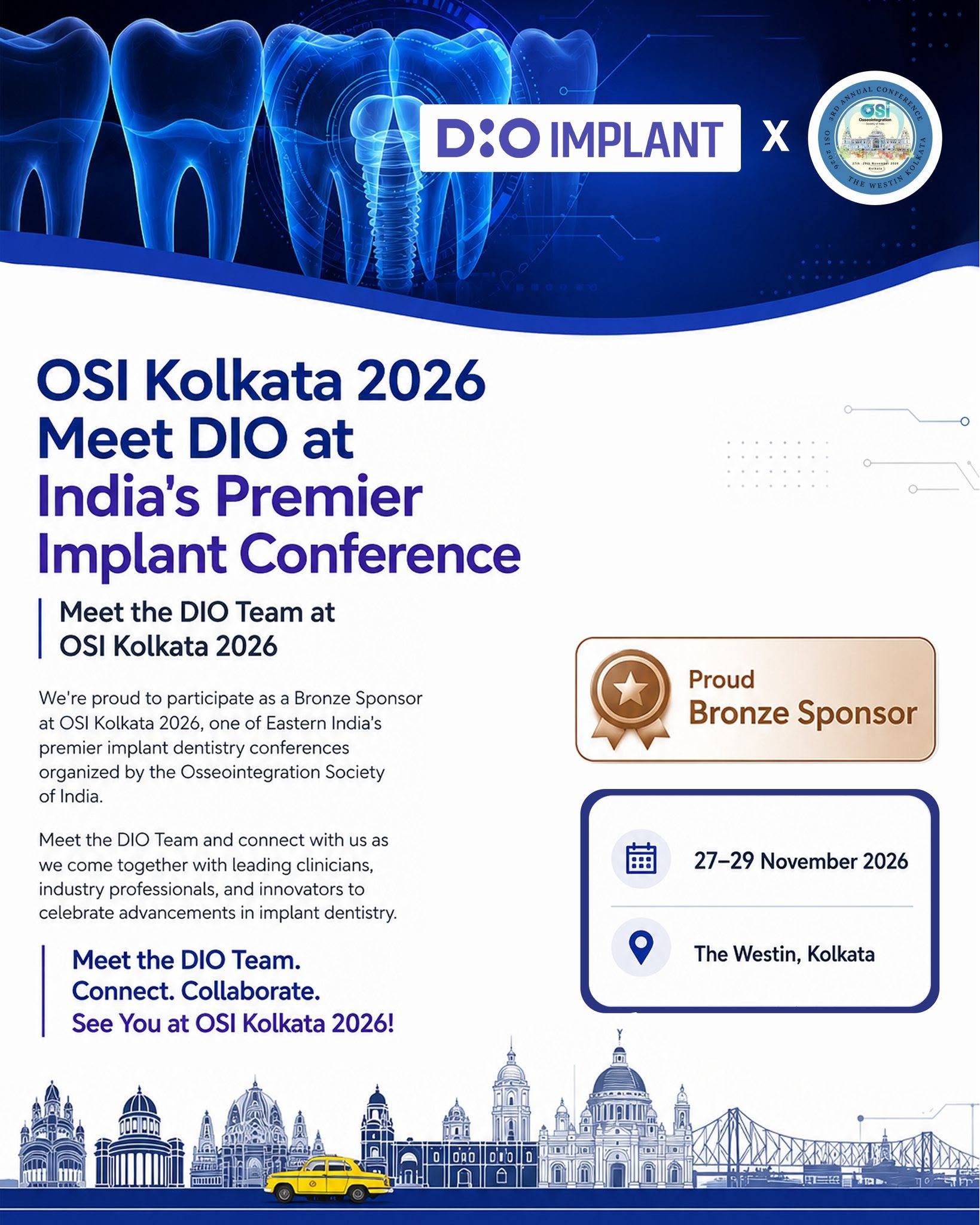
DIO is proud to participate as a Bronze Sponsor at OSI Kolkata 2026, one of Eastern India's premier implant dentistry conferences.

💡 Theme: Immediate Impact: Translating Knowledge into Clinical Success
Implant dentistry begins with basic science and a repeatable process. Training may review oral anatomy, bone quality, healing, osseointegration, implant shapes, and prosthetic connections. These topics help clinicians understand why an implant is chosen and how its position affects the final tooth. Participants can also explore the DIO India dental implant products used across surgical, restorative, and digital workflows.
A strong foundation includes infection control, workspace setup, and instrument handling. Learners should know how to prepare a procedure, follow a drilling sequence, manage irrigation, check depth and direction, and record important details. Step-by-step teaching makes it easier to see where errors can happen and how a careful team can reduce risk.
An implant should support a useful, cleanable, and natural-looking restoration. That is why planning should start with the desired tooth position, not only the available bone. Training explains how clinical photographs, models, scans, and three-dimensional imaging can guide a restorative plan. Dentists learn to think about spacing, implant depth, angulation, emergence, bite forces, and access for future care.
Digital tools can make this information easier to review and share. They do not replace clinical judgment. A sound digital workflow still depends on accurate data, careful matching of scans, and a plan checked by a trained clinician. Our guided implant surgery guide explains the patient journey, while dedicated implant training helps dentists develop the knowledge needed to use these tools responsibly.
Guided surgery uses a digital plan and a patient-specific guide to help transfer an approved implant position to the mouth. Training can cover data capture, planning, guide design, sleeve and drill systems, fit checks, access, irrigation, and safe use. Participants also discuss situations where a guide may not be suitable or where the plan must change during treatment.
This balanced view is important. Guided workflows can support consistency and minimally invasive care in selected cases, but every case has limits. Mouth opening, visibility, bone condition, soft tissue, scan quality, and guide stability can all affect the procedure. Dentists should be prepared to verify the guide, monitor each step, and use another approach if safety requires it.
Successful treatment does not end when the implant is placed. Training links surgical choices with healing, impressions or scans, abutment selection, provisional teeth, final restoration, and bite control. Learners consider how the treatment team can communicate the plan and confirm that parts, records, and timing are correct.
The same teamwork matters in immediate and complex cases. These treatments may require closer control of primary stability, load, prosthetic design, and patient behavior. Education helps clinicians identify the extra checks such cases need. It also makes clear that a fast workflow should never come before diagnosis, informed consent, or sound clinical judgment.
Even a well-planned case can face challenges. Useful education discusses warning signs, common surgical and restorative problems, and the need for timely referral. Dentists should know how to review pain, swelling, healing, stability, hygiene, and changes around an implant. They should also communicate what patients can do at home and when they must return for care.
Long-term reviews protect the result. Recall visits may include a health update, tissue assessment, bite check, hygiene review, and suitable imaging when needed. Patients often need simple instructions about cleaning around the implant and attending regular visits. These habits help the dental team find concerns early and support the restoration over time.
People learn clinical skills best when they can connect an explanation to a real task. Depending on the program, sessions may include lectures, case discussions, planning exercises, demonstrations, model practice, or hands-on work. Asking questions is part of the process. Comparing plans and reviewing why a decision was made can be as valuable as watching a procedure.
Before joining, read the course outcomes and choose a level that matches your current experience. Bring cases or questions when the program allows it. After the course, review your notes, follow the taught protocol, and begin with cases that fit your training and support. Keep clear records and reflect on each result. Continued learning through articles, updates, and case reviews can help knowledge stay current; visit the DIO India dental implant blog for more educational reading.
Training is one part of professional growth. Mentoring, team practice, product knowledge, and support for digital cases can also matter. If you are unsure which course matches your goals, or want information about schedules and clinic solutions, contact DIO Implant India. Our team can help you review available programs and identify a practical next step.
Programs are designed for dentists at different career stages. Entry requirements can vary by course, so clinicians should review the program details or contact DIO India before enrolling.
Many programs combine clear theory with demonstrations, case discussions, planning exercises, and hands-on practice. The exact format and equipment used are listed with each scheduled program.
Yes. Relevant courses explain digital data collection, implant planning, surgical guide workflows, and the clinical steps used in guided implant surgery.
Available details appear on each program card. If a date, fee, or venue is not listed, contact the DIO India team for the next schedule and enrollment information.
Certificate availability depends on the selected program and its completion rules. Confirm the certificate, attendance, and assessment requirements before registration.
DIO India can help clinicians explore implant systems, digital workflows, product information, and further education. Contact the team to discuss the support appropriate for your practice.